
DCT for technology and transformation leaders
For the people who carry a transformation through the organization: which platform must land before which department can move, where a delay comes back amplified, and where AI may act on its own.
Which platform must land before which department can move?
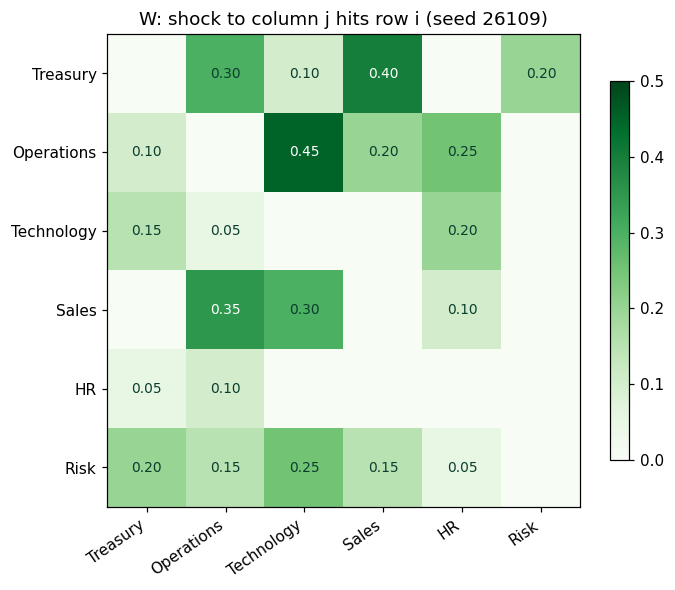
DCT maps whose next state depends on whose. An acyclic dependency map gives a legitimate order of phases; a feedback core is a block that must move together and cannot be split across phases. DCT Helix carries the same logic into delivery: shared platforms, the rungs, are timed to the departments, the strands, they serve.
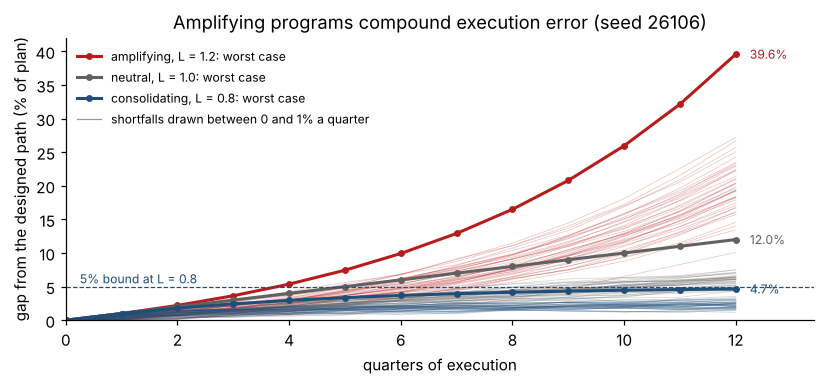
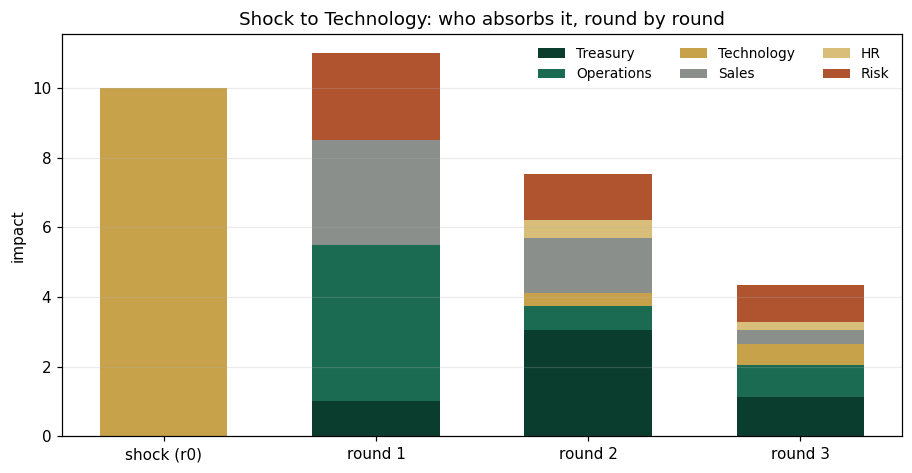
Where does a delay in one area come back amplified?
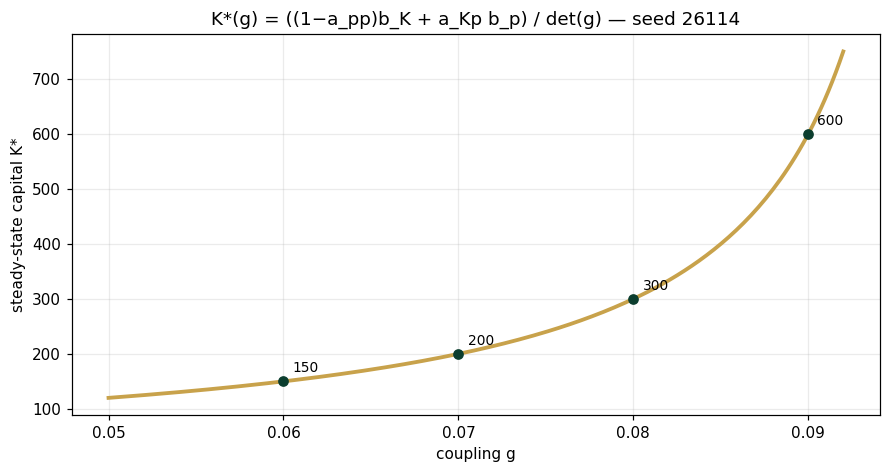
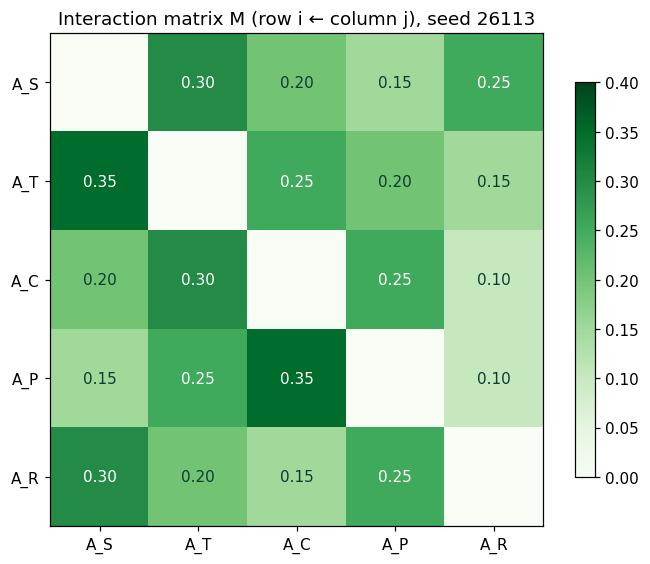
When the architectures are coupled, a disturbance travels the coupling loop. The spectral radius of the Architectural Jacobian says whether it damps or returns larger, and the Neumann multiplier gives its total effect after every round of propagation, not just the first.
Where may AI act on its own?
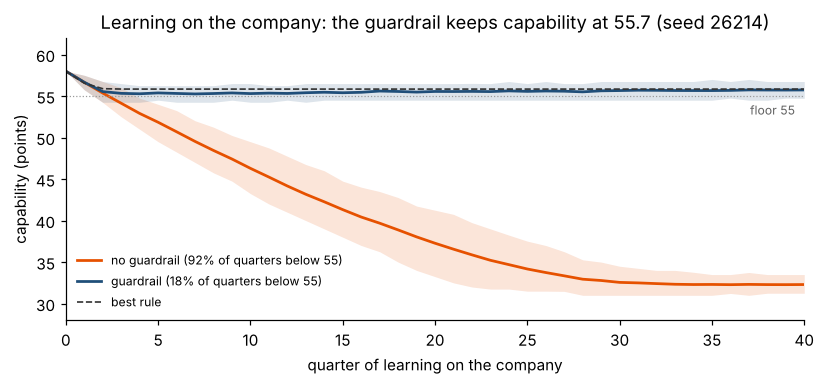
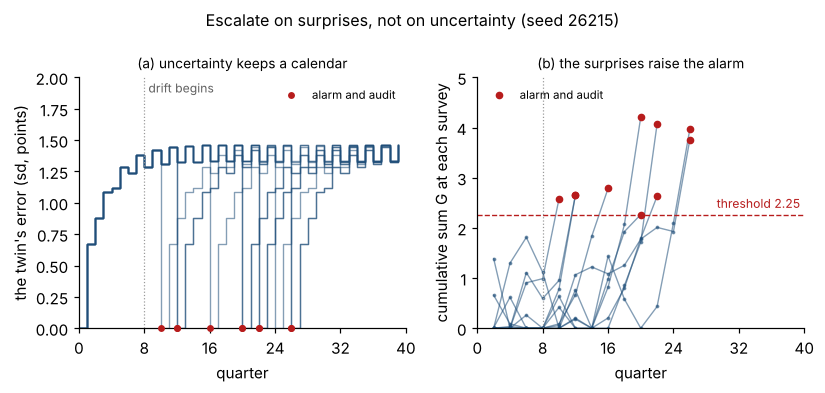
Inside an explicit autonomy envelope. Constrained and shielded learning keeps learned policies inside the viability kernel, and the digital twin escalates when the data surprise it, not merely when they are uncertain.
| Topic | DCT object | Where to read | Lab finding |
|---|---|---|---|
| Architecture and dependencies | State Architecture: the dependency graph and its feedback cores | ||
| Organizational coupling | The unified architecture and its coupling register | ||
| Execution sequencing | The order of operators, and amplification | ||
| ERP, data and the operating model | Rungs, sequenced to the strands they serve · DCT Helix™ | ||
| AI | The intelligence layer and the autonomy envelope | ||
| Data and digital twins | Filtering, synchronization and drift detection |
Meridian Group is the book's fictional company. These are the steps that matter to the people who run its programme, each a figure from the laboratories.
Meridian is fictional; its numbers are the book's declarations.
- 1
- 2
- 3
- 4
- 5
- 6
- 1Vol. I, Ch. 6Enterprise Transformation Operators
Transformation operators: why order matters and what reordering costs.
- 2Vol. I, Ch. 9Enterprise State Architecture
The dependency graph, feedback cores and the limits of phasing.
- 3Vol. I, Ch. 13Unified Enterprise Transformation Architecture
One enterprise under five descriptions, joined by a coupling register.
- 4Vol. I, Ch. 14Mathematical Analysis of the Unified Enterprise Transformation Architecture
Stability, amplification and the viability kernel.
- 5Vol. II, Ch. 13Machine Learning for Enterprise Transformation
Machine learning, with the guarantees it does and does not carry.
- 6Vol. II, Ch. 14Artificial Intelligence for Enterprise Optimization
AI that learns on the company, inside guardrails.
- 7Vol. II, Ch. 15Enterprise Digital Twins and Autonomous Enterprise Transformation
Digital twins, drift detection and the autonomy envelope.
- 8Vol. II, Ch. 16Enterprise Applications and Integrated Transformation Case Studies
The integrated case, from sequencing to triggers.
0 of 8 read
Cases to read
Endorsements
…essential reading for corporate leaders, chief architects, board members, and practitioners committed to driving long-term value, resilience, and strategic agility.
Affiliations are listed for identification only.