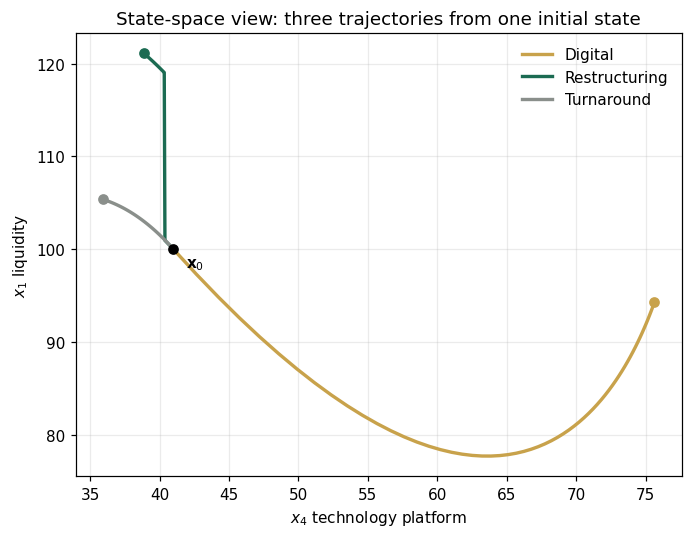
The path is graded, not just the destination.
“defined on the whole trajectory rather than on its endpoint”


10 principles, each one shareable.
“defined on the whole trajectory rather than on its endpoint”
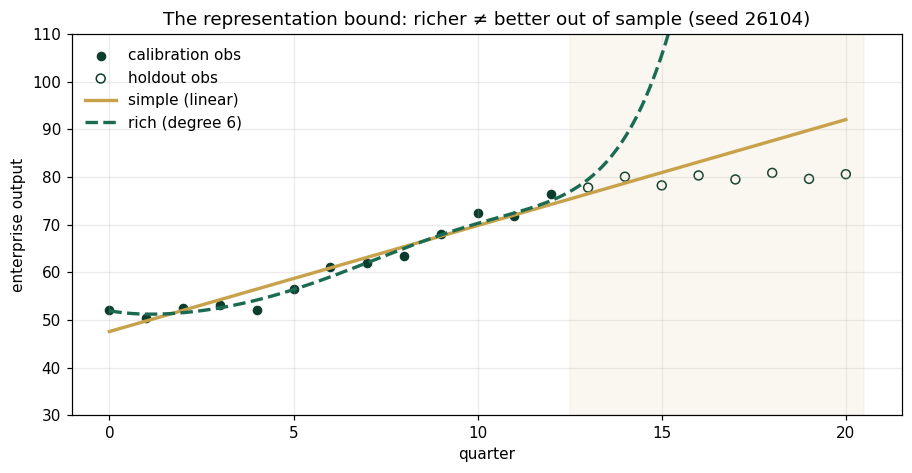
“Indicator dashboards fail sufficiency”
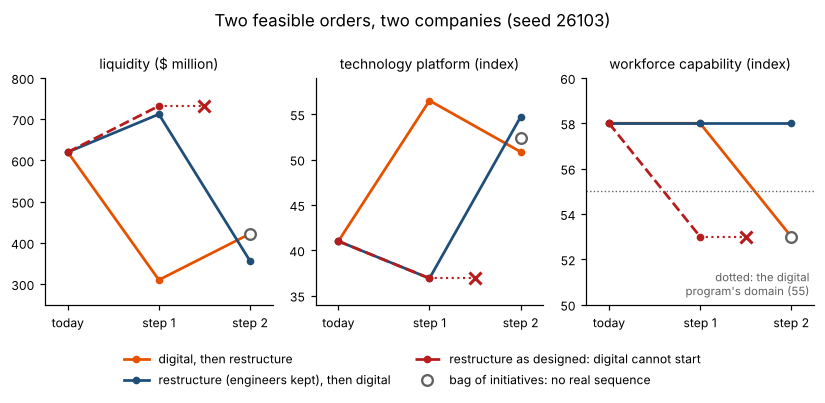
“Non-commutativity is sequencing”
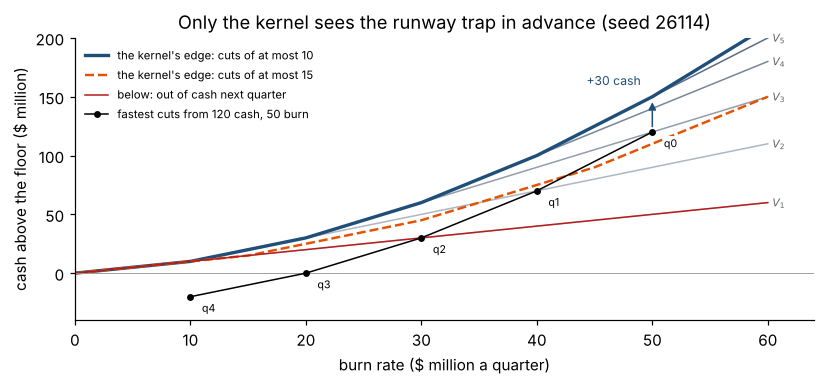
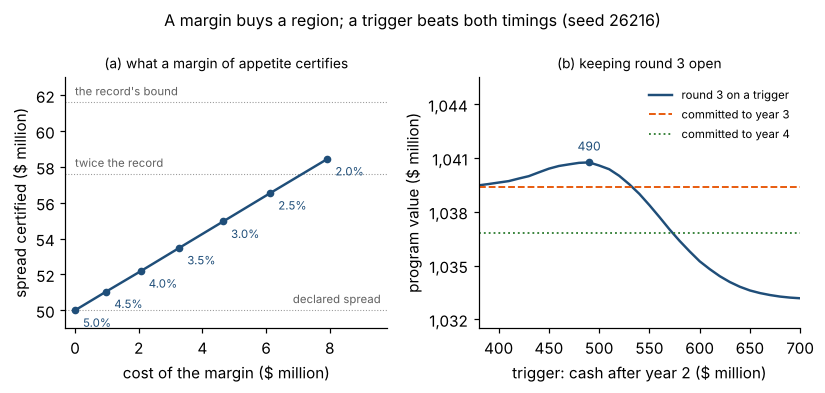
“the breach is already determined, only its date is open”
“optimizing over the wrong set produces plans that are optimal and doomed”
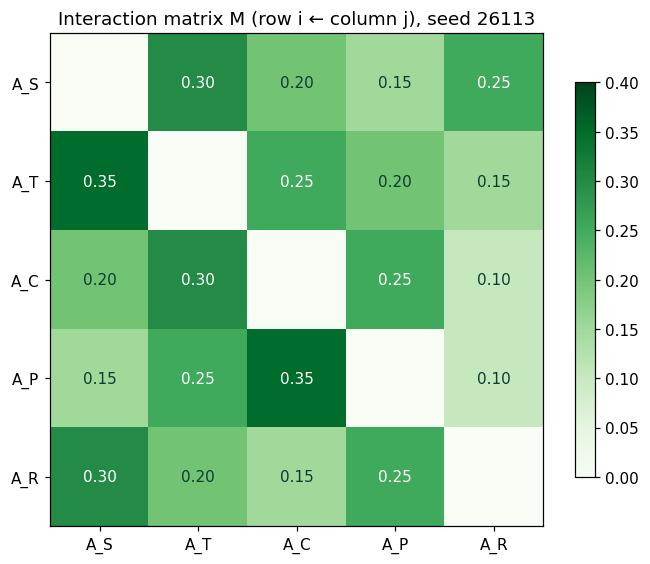
“costless when no coupling links the ledgers' decisions, strictly worse exactly when they exclude every integrated optimum”
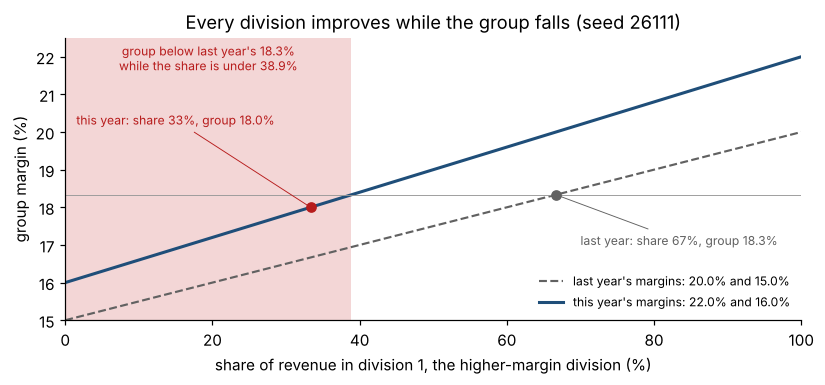
“Risk adjustment enters through the criterion, not afterwards”
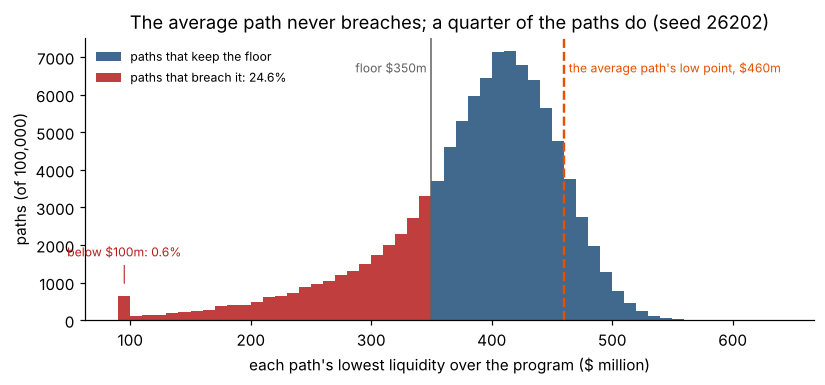
“Multipliers are prices”
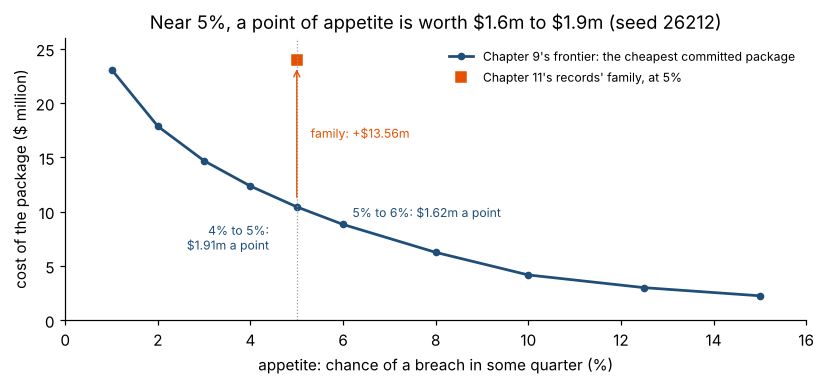
“Triggers are stated in advance as certificate violations, not as discomfort with results”
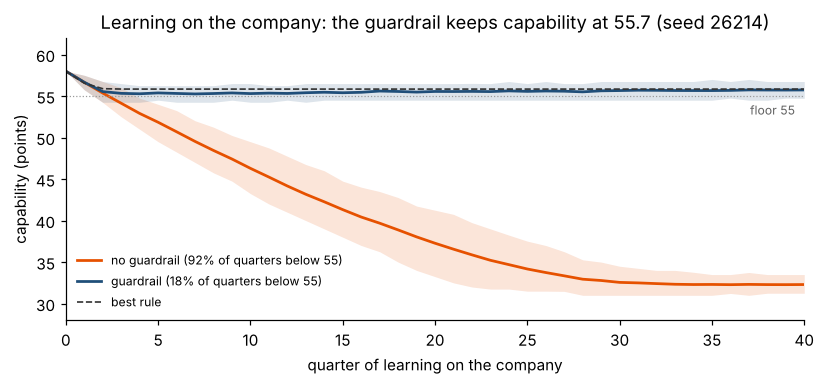
“inside it the twin acts, outside it a human decides”
1
Transformation is a deliberate, discontinuous move to a new equilibrium, paid for in effort, time and money. Incremental change alone never gets there.
2
The end is shareholder value through sustainable, profitable growth, organic and acquisitive. Growth counts only where returns beat the cost of capital.
3
Begin with customers, competitors and trends, not with the organization chart. Advantage is earned in the market and defended there.
4
Systems and processes move only as fast as vision, leadership and incentives move people. Neither holds without the other.
5
Organizational maturity decides how large a step can succeed, and the weakest critical capability caps it.
6
Finance, people, customer experience and operations transform at different times. Asynchrony is a fact to orchestrate, not a failure to eliminate.
7
Being out of step costs money: reconciliations, workarounds, duplicate data and conflicting KPIs. Measure it, own it and plan it down.
Echoes DCT principle 10: Autonomy only inside a declared envelope.
8
ERP, data and end-to-end processes are sequenced so that departments can move without breaking each other.
9
The capacity to absorb change is finite and recovers slowly. Overload fails more transformations than ambition does.
10
Business cases, forecasts and pro forma statements are stochastic. Commit with a stated chance of success, not a single number.
11
Release money in tranches at gates, with kill criteria written before it is spent.
12
Nothing advances without a certificate: what was declared, what was checked, what remains open and who owns it.
13
Engagement, incentives, communication and alignment, vertical and horizontal, turn plans into results.
14
And audit every measure that is paid on, before it becomes a target to be gamed.
15
Customers, employees and partners see what management cannot. Their feedback is an instrument, not a survey.
16
KPIs, balanced scorecards, process and customer metrics, from the board to the front line, read in time to act.
17
Value counts when it shows in the income statement, the balance sheet or cash.
18
Every step-change is held and extended by Lean Six Sigma, kaizen and daily improvement.
19
Industry best practice, adopted and adapted, becomes the company's habit rather than a project.
20
There is no end-state. The portfolio is re-planned every quarter, and the next step is triggered before a crisis forces it.