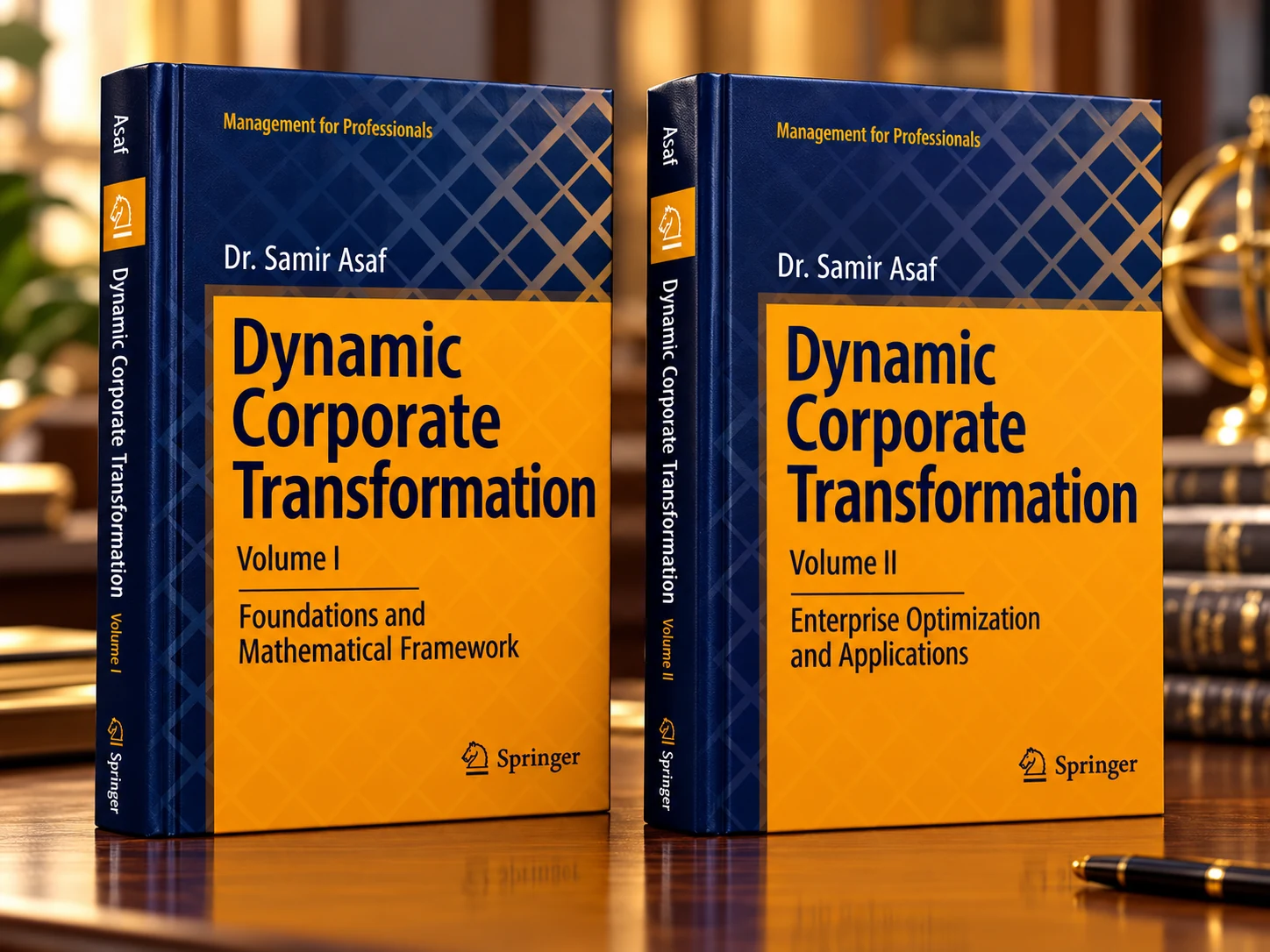
DCT Lexicon · Optimization
Discount rate (hurdle rate)
r
The declared annual rate at which later cash counts for less than earlier cash; the book calls the planning rate the hurdle rate.
Drafted for the author's approval from Vol. II, Notation ("r, hurdle rate (Def. 5.1)") and Chapter 5
In depth
In the book
Delays: costs come before payoffs; an automation round costs $120 million in its year and saves for every year after, and the discount rate decides how much later counts.
Vol. II, Chapter 5 introduction (What time adds), verbatim
Formal statement
A cash flow received years from now is worth today; in continuous time, with .
Drafted for the author's approval, after Vol. II, Definition 5.1 (hurdle rate $r$; $\rho = \ln(1+r)$ in continuous time)
Common misreading
A common mistake is to think discounting alone makes a decision dynamic.
Vol. II, LOS 5.1, verbatim
How AXIOM uses it
The discount rate is a company setting, declared with an owner; AXIOM never assumes one. It enters every valuation the stochastic business case computes.
Drafted for the author's approval, from D-036
In the book: Vol. II, Ch. 5: Dynamic Enterprise Optimization
Related: Enterprise value (simulated)
V2.Def.5.1