
DCT Lexicon · Governing Dynamics
Probability Kernels
A probability kernel is the measurable object that turns a deterministic map of the enterprise into a law of motion: from every state and decision it assigns a probability measure over the next state.
DCT Governing Dynamics
In depth
Formal statement
Let be the state space and the control space, both standard Borel. A transition kernel is a map such that is a probability measure for every , and is measurable for every . Kernels compose by integration, and a policy closes the loop.
DCT Governing Dynamics: the element's drawer (/governing-dynamics)
Ionescu-Tulcea extension
Given an initial law and a sequence of kernels, there is a unique probability measure on the path space whose finite-dimensional marginals are the iterated kernel compositions. Every simulated path of the enterprise, and every expectation taken over paths, rests on this construction.
DCT Governing Dynamics: the element's drawer (/governing-dynamics)
In DCT
The kernel is the single source of randomness in the architecture. Bellman recursion integrates against it, belief-state filtering propagates through it, occupation measures are its time-averaged footprints, and Wasserstein ambiguity sets are balls around it. Declaring the kernel is what makes "the probability of a breach" a well-posed quantity rather than a figure of speech.
DCT Governing Dynamics: the element's drawer (/governing-dynamics)
Limits
Measurability is not a technicality: without a measurable selection of policies, the value function need not be Borel and the expectation in Bellman's equation may be undefined. Universally measurable policies, or lower semi-analytic value functions, restore the theory.
DCT Governing Dynamics: the element's drawer (/governing-dynamics)
Go next
- Belief-State Control: Filtering propagates beliefs through the same kernel (Pathway 1).
- Bellman Recursion: Bellman recursion integrates the value function against the kernel.
- Occupation Measures: Occupation measures are the kernel's long-run footprint under a policy.
DCT Governing Dynamics: the element's drawer (/governing-dynamics)
References
- Ionescu-Tulcea (1949)
- Bertsekas & Shreve (1978), Stochastic Optimal Control: The Discrete-Time Case
- Kallenberg (2002), Foundations of Modern Probability
DCT Governing Dynamics: the element's drawer (/governing-dynamics)
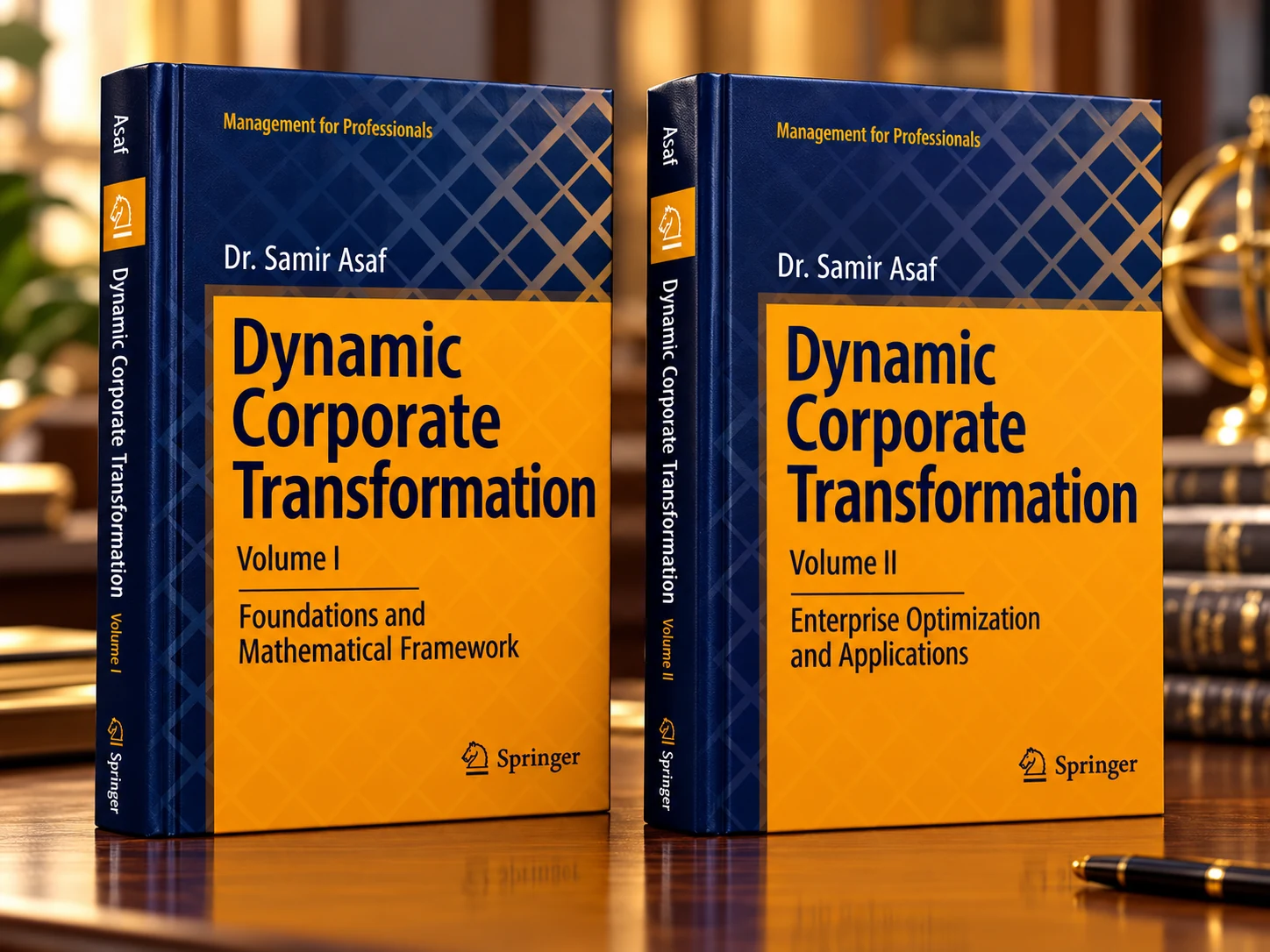
In the book: Vol. I, Ch. 8: Stochastic Enterprise Dynamics · Vol. II, Ch. 9: Stochastic Enterprise Optimization
Related: Belief-State Control · Bellman Recursion · Occupation Measures
GD.01