DCT Lexicon · Governing Dynamics
Value of Information
Information is worth what it changes. The value of information is the gain in optimal expected value from deciding after a signal rather than before it, and it is never negative.
DCT Governing Dynamics
In depth
Formal statement
With prior over states, signal and an admissible decision set, the expected value of sample information compares deciding with and without ; perfect information is its upper bound.
DCT Governing Dynamics: the element's drawer (/governing-dynamics)
Blackwell's theorem
One experiment is more informative than another for every decision problem if and only if the second is a garbling of the first. Information is valuable only through the decisions it can change; a signal that never changes the optimal action has zero value.
DCT Governing Dynamics: the element's drawer (/governing-dynamics)
In DCT
Whether to buy a better survey, a monitoring system or an early warning is a value-of-information question. In multistage problems it equals the multiplier on nonanticipativity, which ties governance of decision rights directly to the price of knowledge.
DCT Governing Dynamics: the element's drawer (/governing-dynamics)
Limits
Net of its cost, a signal can be worth buying at one precision and not at another; in strategic settings, more information can leave a party worse off. Value also depends on the decision set: removing an option can make information worthless.
DCT Governing Dynamics: the element's drawer (/governing-dynamics)
Go next
- Belief-State Control: Signals move the belief state.
- Adapted Policies and Nonanticipativity: Information value is the price of nonanticipativity (Pathway 4).
- Meridian GEOP: The GEOP decides which information to buy.
DCT Governing Dynamics: the element's drawer (/governing-dynamics)
References
- Raiffa & Schlaifer (1961)
- Blackwell (1953), Equivalent comparisons of experiments
- Howard (1966), Information value theory
DCT Governing Dynamics: the element's drawer (/governing-dynamics)
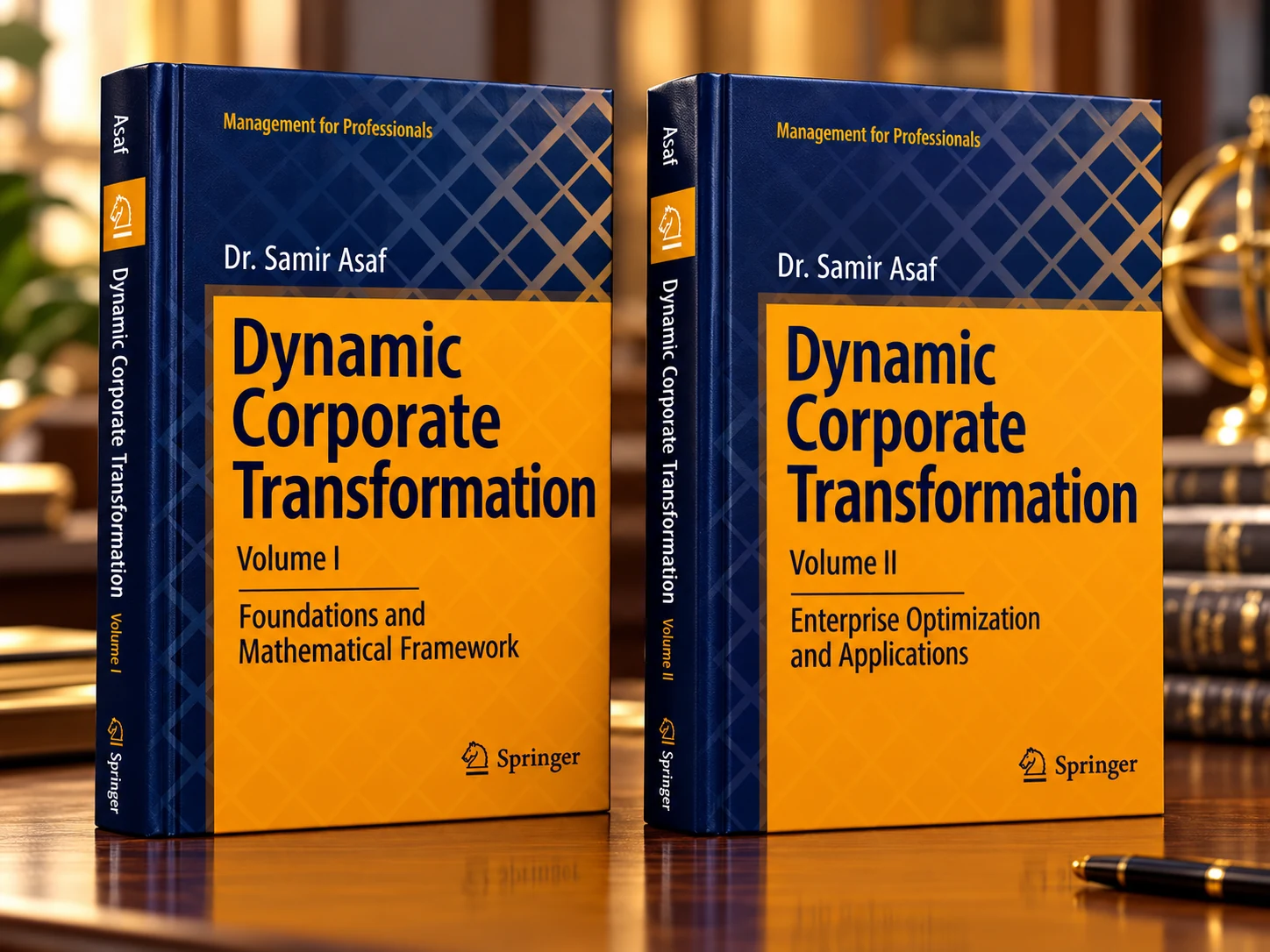
In the book: Vol. II, Ch. 13: Machine Learning for Enterprise Transformation · Vol. II, Ch. 15: Enterprise Digital Twins and Autonomous Enterprise Transformation
Related: Belief-State Control · Adapted Policies and Nonanticipativity · Meridian GEOP
GD.21