DCT Lexicon · Robustness
Wasserstein distance to the target state
W₁
How far an uncertain reading sits from its target: the least average distance its possible outcomes must move to land inside the target set (the type-1 Wasserstein, or transport, distance).
The distance is the book's (Vol. II, Section 11.3); its use between today's state and the target state is AXIOM's proposed construct (AXIOM.PROPOSED.W1_TARGET_DISTANCE), not the book's
In depth
In the book
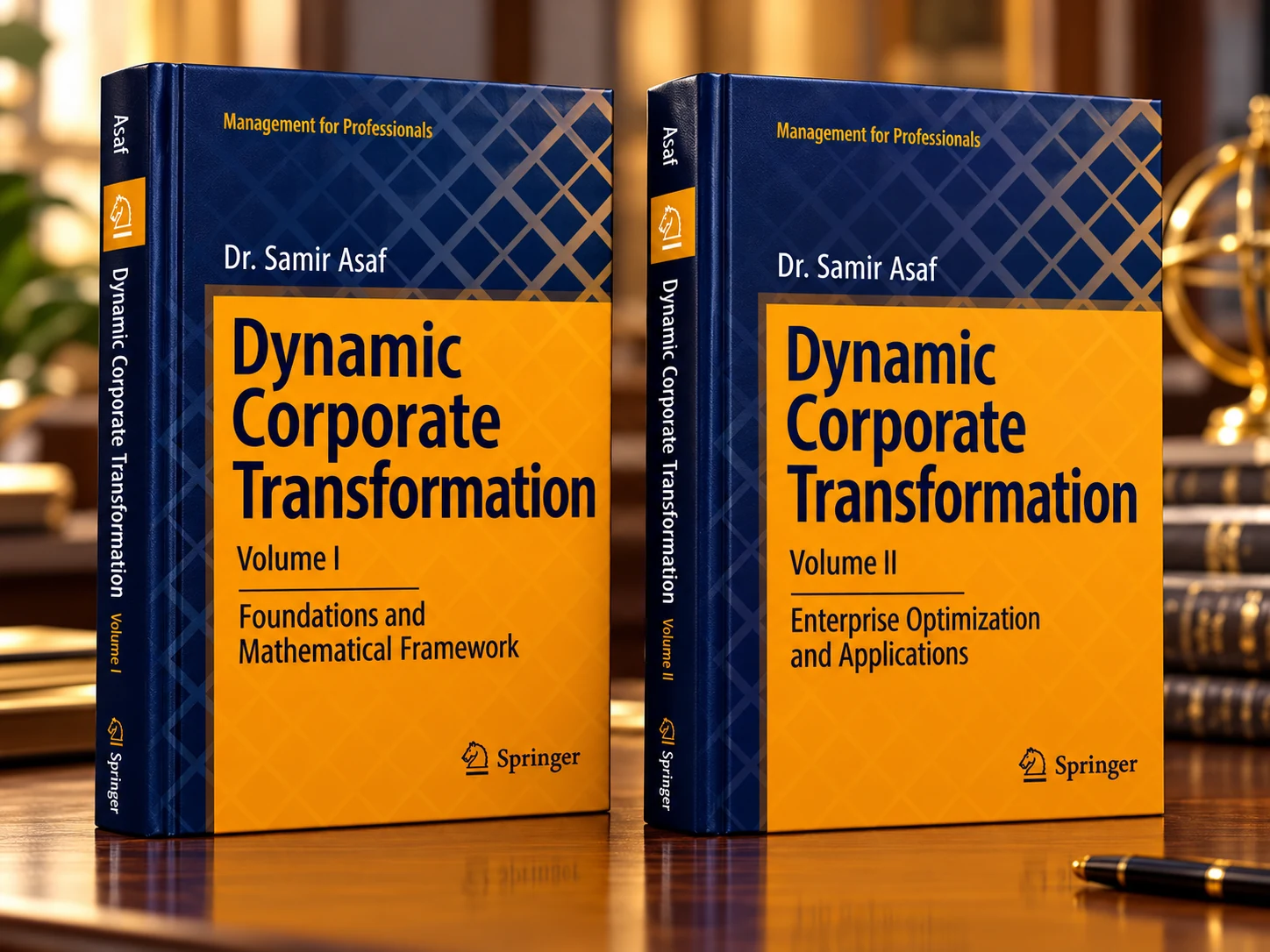
The ball of laws within transport distance of a record’s empirical law; it moves futures rather than reweighting them. Its dual form adds a Lipschitz premium, and it keeps a chance when the futures nearest a breach lie on average at least from it (Theorem 11.3).
Vol. II, Glossary of Key Terms, p. 405 (Wasserstein ambiguity set), verbatim
Formal statement
Drafted for the author's approval: the type-1 Wasserstein distance, and its value from a law to the laws on a target set $T$
How to read it
Zero means today's uncertain state already lies inside the target. A larger number means more of today's possible outcomes, or outcomes further away, must move. Each objective's distance is scaled by its declared range, so distances in different units can be added.
Drafted for the author's approval
Common misreading
A common mistake is to set the radius to the law’s doubts rather than to the record’s size.
Vol. II, LOS 11.3, verbatim
How AXIOM uses it
On the Gap to target tab, for each objective with a declared reading, a reading error and a target, AXIOM computes the distance from the reading's law to the target set in closed form, scales it by the objective's declared range and adds the objectives. The engine states its assumptions: a "±" reading is a 95% band, the objectives are independent, and the distance across objectives is the sum of theirs. The book's own Wasserstein object, a ball around a record, is a different reading: see Wasserstein distributionally robust optimization.
Drafted for the author's approval, from AXIOM's Wasserstein engine (D-086, D-091)
In the book: Vol. II, Ch. 11: Distributionally Robust Enterprise Optimization
Related: Wasserstein Distributionally Robust Optimization · Target state · Kullback–Leibler divergence
V2.Thm.11.3 · GD.17