

Skip to content

DCT Lexicon · Governing Dynamics

Chance Constraints and Certificates

A chance constraint asks that a commitment hold with probability at least 1−α. A certificate makes that claim checkable: an estimate, its error, and a test on fresh data.

DCT Governing Dynamics

In depth

Formal statement

For decision xx and random ξ\xi, the chance constraint and its convex AV@R approximation are:

P(g(x,ξ)≤0)  ≥  1−α\mathbb{P}\big( g(x,\xi) \le 0 \big) \;\ge\; 1 - \alphaAV@Rα(g(x,ξ))≤0    ⟹    P(g(x,ξ)≤0)≥1−α,p^N±zp^N(1−p^N)/N\mathrm{AV@R}_\alpha\big(g(x,\xi)\big) \le 0 \;\;\Longrightarrow\;\; \mathbb{P}\big(g(x,\xi) \le 0\big) \ge 1 - \alpha,\qquad \hat p_N \pm z\sqrt{\hat p_N(1-\hat p_N)/N}

DCT Governing Dynamics: the element's drawer (/governing-dynamics)

Scenario approach (Campi–Garatti)

For a convex program with dd decision variables solved on NN i.i.d. scenarios, the probability that its solution violates the constraint with probability more than ε\varepsilon is at most the binomial tail below, independent of the law of ξ\xi.

PN{V(xN⋆)>ε}  ≤  ∑i=0d−1(Ni)εi(1−ε)N−i\mathbb{P}^N\big\{ V(x_N^\star) > \varepsilon \big\} \;\le\; \sum_{i=0}^{d-1} \binom{N}{i} \varepsilon^i (1-\varepsilon)^{N-i}

DCT Governing Dynamics: the element's drawer (/governing-dynamics)

In DCT

"At most 5% of paths breach the floor" is a chance constraint. Its certificate states the estimate, its standard error, the margin to the appetite and the fresh-path check, and grades the result: a design chosen on the book's paths is tested on paths it has never seen.

DCT Governing Dynamics: the element's drawer (/governing-dynamics)

Limits

Chance constraints are nonconvex in general, and a design tuned on the same scenarios it is judged on overstates its reliability. A margin smaller than the estimate's error is not a pass.

DCT Governing Dynamics: the element's drawer (/governing-dynamics)

Go next

  • Full Certificates: Chance certificates are assembled into the full certificate (Pathway 10).
  • Viability Kernels: A probabilistic viability kernel keeps the floor with high probability.
  • Wasserstein Distributionally Robust Optimization: Distributionally robust versions hold for every law in the ball.

DCT Governing Dynamics: the element's drawer (/governing-dynamics)

References

  • Charnes & Cooper (1959)
  • Nemirovski & Shapiro (2006), Convex approximations of chance constrained programs
  • Campi & Garatti (2008)

DCT Governing Dynamics: the element's drawer (/governing-dynamics)

In the book: Vol. II, Ch. 9: Stochastic Enterprise Optimization · Vol. I, Ch. 14: Mathematical Analysis of the Unified Enterprise Transformation Architecture

Related: Full Certificates · Viability Kernels · Wasserstein Distributionally Robust Optimization

GD.18
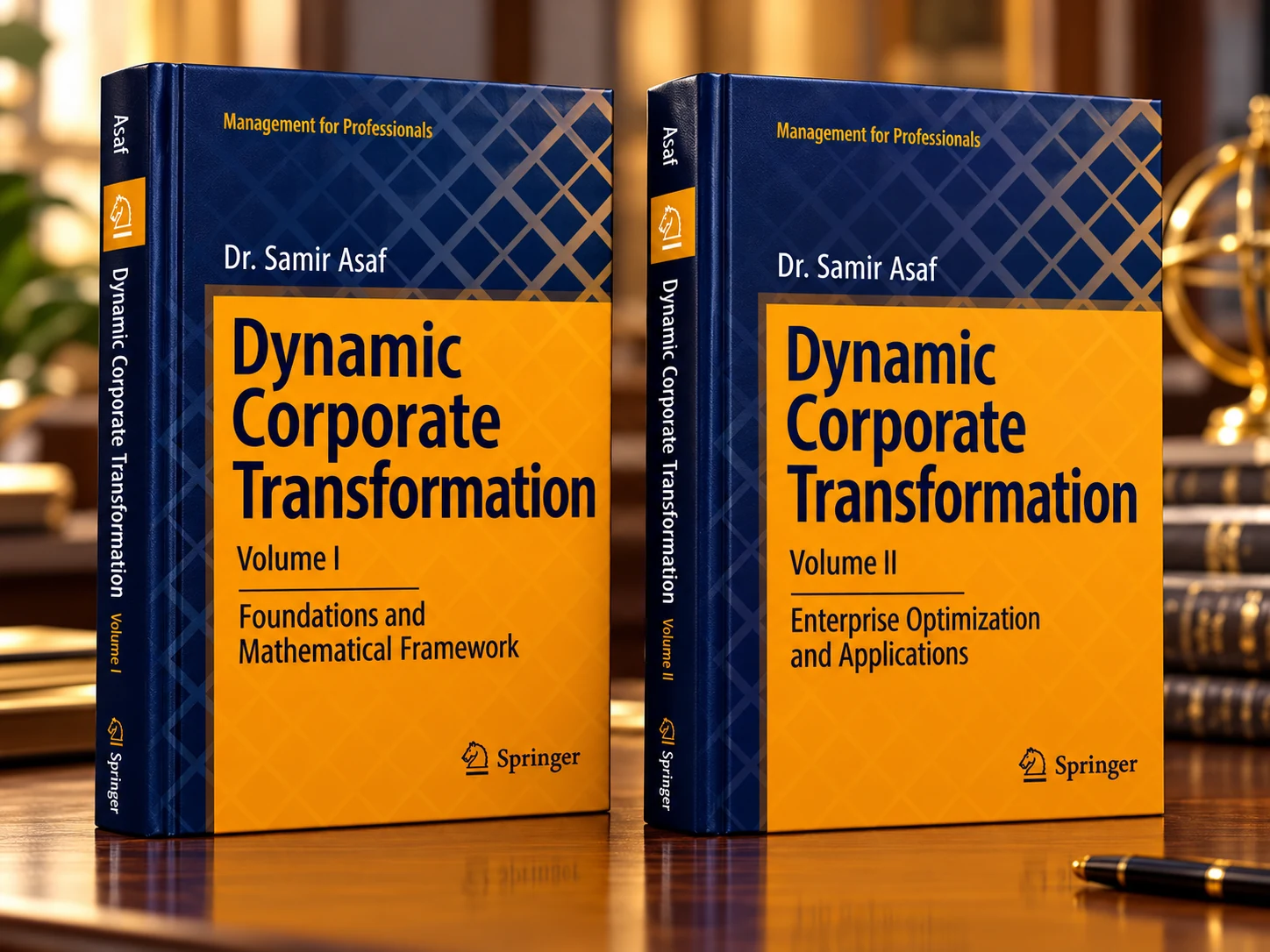
Dynamic Corporate Transformation — Volume I: Foundations and Mathematical Framework; Volume II: Enterprise Optimization & Applications
Jump to any chapter

Volume I: Foundations and Mathematical Framework

  1. Ch. 1Introduction to Dynamic Corporate Transformation
  2. Ch. 2Enterprise Systems and Transformation
  3. Ch. 3Mathematical Foundations
  4. Ch. 4Enterprise Modeling Principles
  5. Ch. 5Enterprise State Representation
  6. Ch. 6Enterprise Transformation Operators
  7. Ch. 7Dynamic Enterprise Systems
  8. Ch. 8Stochastic Enterprise Dynamics
  9. Ch. 9Enterprise State Architecture
  10. Ch. 10Enterprise Capital Architecture
  11. Ch. 11Enterprise Performance Architecture
  12. Ch. 12Enterprise Risk, Resilience, and Robustness Architecture
  13. Ch. 13Unified Enterprise Transformation Architecture
  14. Ch. 14Mathematical Analysis of the Unified Enterprise Transformation Architecture
  15. Ch. 15Mathematical Formulation of Enterprise Optimization
  16. Ch. 16Synthesis, Future Directions, and Transition to Volume II

Volume II: Enterprise Optimization & Applications

  1. Ch. 1Introduction to Enterprise Optimization
  2. Ch. 2The General Enterprise Optimization Problem Revisited
  3. Ch. 3Convex Enterprise Optimization
  4. Ch. 4Nonlinear and Mixed-Integer Enterprise Optimization
  5. Ch. 5Dynamic Enterprise Optimization
  6. Ch. 6Optimal Control of Enterprise Systems
  7. Ch. 7Dynamic Programming for Enterprise Systems
  8. Ch. 8Hamilton–Jacobi–Bellman Enterprise Framework
  9. Ch. 9Stochastic Enterprise Optimization
  10. Ch. 10Neuro-Fuzzy Robust Enterprise Optimization
  11. Ch. 11Distributionally Robust Enterprise Optimization
  12. Ch. 12Multi-Objective Enterprise Optimization
  13. Ch. 13Machine Learning for Enterprise Transformation
  14. Ch. 14Artificial Intelligence for Enterprise Optimization
  15. Ch. 15Enterprise Digital Twins and Autonomous Enterprise Transformation
  16. Ch. 16Enterprise Applications and Integrated Transformation Case Studies

Dynamic Corporate Transformation

Springer Nature · Management for Professionals · Forthcoming 2027

  • Volume I — Foundations and Mathematical Framework
  • Volume II — Enterprise Optimization & Applications
Buy Volume I: Dynamic Corporate Transformation: Foundations and Mathematical FrameworkBuy Volume II: Dynamic Corporate Transformation: Enterprise Optimization & Applications
Jump to any chapter

Volume I: Foundations and Mathematical Framework

  1. Ch. 1Introduction to Dynamic Corporate Transformation
  2. Ch. 2Enterprise Systems and Transformation
  3. Ch. 3Mathematical Foundations
  4. Ch. 4Enterprise Modeling Principles
  5. Ch. 5Enterprise State Representation
  6. Ch. 6Enterprise Transformation Operators
  7. Ch. 7Dynamic Enterprise Systems
  8. Ch. 8Stochastic Enterprise Dynamics
  9. Ch. 9Enterprise State Architecture
  10. Ch. 10Enterprise Capital Architecture
  11. Ch. 11Enterprise Performance Architecture
  12. Ch. 12Enterprise Risk, Resilience, and Robustness Architecture
  13. Ch. 13Unified Enterprise Transformation Architecture
  14. Ch. 14Mathematical Analysis of the Unified Enterprise Transformation Architecture
  15. Ch. 15Mathematical Formulation of Enterprise Optimization
  16. Ch. 16Synthesis, Future Directions, and Transition to Volume II

Volume II: Enterprise Optimization & Applications

  1. Ch. 1Introduction to Enterprise Optimization
  2. Ch. 2The General Enterprise Optimization Problem Revisited
  3. Ch. 3Convex Enterprise Optimization
  4. Ch. 4Nonlinear and Mixed-Integer Enterprise Optimization
  5. Ch. 5Dynamic Enterprise Optimization
  6. Ch. 6Optimal Control of Enterprise Systems
  7. Ch. 7Dynamic Programming for Enterprise Systems
  8. Ch. 8Hamilton–Jacobi–Bellman Enterprise Framework
  9. Ch. 9Stochastic Enterprise Optimization
  10. Ch. 10Neuro-Fuzzy Robust Enterprise Optimization
  11. Ch. 11Distributionally Robust Enterprise Optimization
  12. Ch. 12Multi-Objective Enterprise Optimization
  13. Ch. 13Machine Learning for Enterprise Transformation
  14. Ch. 14Artificial Intelligence for Enterprise Optimization
  15. Ch. 15Enterprise Digital Twins and Autonomous Enterprise Transformation
  16. Ch. 16Enterprise Applications and Integrated Transformation Case Studies