

Skip to content

DCT Lexicon · Optimization

Method passport

The record every AXIOM result carries: the problem class and why, the method and solver, what it certifies, its assumptions, and the Governing Dynamics elements it rests on.

No book source for the term: it is AXIOM's (D-037). It implements the book's rule that the method is chosen by the problem's structure (Vol. II, Theorem 1.3, Table 2.5) and the solver's admission contract (Vol. I, Table 15.4)

In depth

What it is

Methods are chosen by the problem’s structure (Vol II Thm 1.3, Table 2.5), and every result carries a method passport: the problem class and why, the method and solver, what it certifies (optimal within a stated gap, statistical, local only), its assumptions, and the Governing Dynamics elements (GD.01–GD.23) it rests on.

D-037 (27 October 2026), verbatim

In the book

The admission terms under which any solution method—classical or learned—may serve a GEOP instance: declared certificates of feasibility, optimality grade, and stability, returned with the solution (Table 15.4; Theorem 15.7(vii)).

Vol. I, Glossary of Key Terms, p. 376 (Solver certificate contract), verbatim

How AXIOM uses it

Open the Analyst view on any number to read its passport. A result whose engine rests on no Governing Dynamics element says so rather than leaving the list empty.

Drafted for the author's approval

In the book: Vol. II, Ch. 1: Introduction to Enterprise Optimization · Vol. II, Ch. 2: The General Enterprise Optimization Problem Revisited · Vol. I, Ch. 15: Mathematical Formulation of Enterprise Optimization

Related: Optimal (with solver evidence) · Full Certificates

V2.Thm.1.3 · V2.Tab.2.5 · V1.Tab.15.4
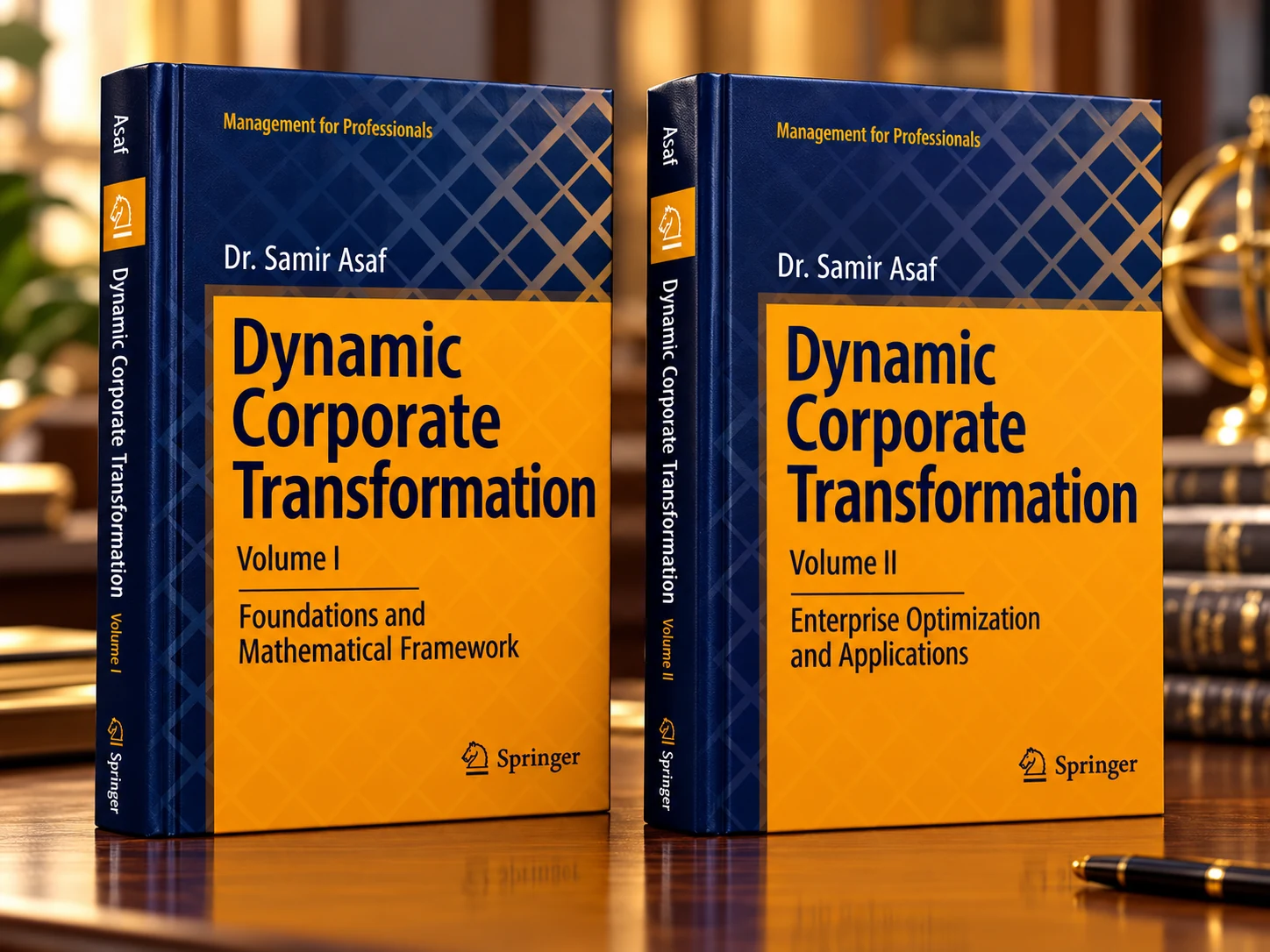
Dynamic Corporate Transformation — Volume I: Foundations and Mathematical Framework; Volume II: Enterprise Optimization & Applications
Jump to any chapter

Volume I: Foundations and Mathematical Framework

  1. Ch. 1Introduction to Dynamic Corporate Transformation
  2. Ch. 2Enterprise Systems and Transformation
  3. Ch. 3Mathematical Foundations
  4. Ch. 4Enterprise Modeling Principles
  5. Ch. 5Enterprise State Representation
  6. Ch. 6Enterprise Transformation Operators
  7. Ch. 7Dynamic Enterprise Systems
  8. Ch. 8Stochastic Enterprise Dynamics
  9. Ch. 9Enterprise State Architecture
  10. Ch. 10Enterprise Capital Architecture
  11. Ch. 11Enterprise Performance Architecture
  12. Ch. 12Enterprise Risk, Resilience, and Robustness Architecture
  13. Ch. 13Unified Enterprise Transformation Architecture
  14. Ch. 14Mathematical Analysis of the Unified Enterprise Transformation Architecture
  15. Ch. 15Mathematical Formulation of Enterprise Optimization
  16. Ch. 16Synthesis, Future Directions, and Transition to Volume II

Volume II: Enterprise Optimization & Applications

  1. Ch. 1Introduction to Enterprise Optimization
  2. Ch. 2The General Enterprise Optimization Problem Revisited
  3. Ch. 3Convex Enterprise Optimization
  4. Ch. 4Nonlinear and Mixed-Integer Enterprise Optimization
  5. Ch. 5Dynamic Enterprise Optimization
  6. Ch. 6Optimal Control of Enterprise Systems
  7. Ch. 7Dynamic Programming for Enterprise Systems
  8. Ch. 8Hamilton–Jacobi–Bellman Enterprise Framework
  9. Ch. 9Stochastic Enterprise Optimization
  10. Ch. 10Neuro-Fuzzy Robust Enterprise Optimization
  11. Ch. 11Distributionally Robust Enterprise Optimization
  12. Ch. 12Multi-Objective Enterprise Optimization
  13. Ch. 13Machine Learning for Enterprise Transformation
  14. Ch. 14Artificial Intelligence for Enterprise Optimization
  15. Ch. 15Enterprise Digital Twins and Autonomous Enterprise Transformation
  16. Ch. 16Enterprise Applications and Integrated Transformation Case Studies

Dynamic Corporate Transformation

Springer Nature · Management for Professionals · Forthcoming 2027

  • Volume I — Foundations and Mathematical Framework
  • Volume II — Enterprise Optimization & Applications
Buy Volume I: Dynamic Corporate Transformation: Foundations and Mathematical FrameworkBuy Volume II: Dynamic Corporate Transformation: Enterprise Optimization & Applications
Jump to any chapter

Volume I: Foundations and Mathematical Framework

  1. Ch. 1Introduction to Dynamic Corporate Transformation
  2. Ch. 2Enterprise Systems and Transformation
  3. Ch. 3Mathematical Foundations
  4. Ch. 4Enterprise Modeling Principles
  5. Ch. 5Enterprise State Representation
  6. Ch. 6Enterprise Transformation Operators
  7. Ch. 7Dynamic Enterprise Systems
  8. Ch. 8Stochastic Enterprise Dynamics
  9. Ch. 9Enterprise State Architecture
  10. Ch. 10Enterprise Capital Architecture
  11. Ch. 11Enterprise Performance Architecture
  12. Ch. 12Enterprise Risk, Resilience, and Robustness Architecture
  13. Ch. 13Unified Enterprise Transformation Architecture
  14. Ch. 14Mathematical Analysis of the Unified Enterprise Transformation Architecture
  15. Ch. 15Mathematical Formulation of Enterprise Optimization
  16. Ch. 16Synthesis, Future Directions, and Transition to Volume II

Volume II: Enterprise Optimization & Applications

  1. Ch. 1Introduction to Enterprise Optimization
  2. Ch. 2The General Enterprise Optimization Problem Revisited
  3. Ch. 3Convex Enterprise Optimization
  4. Ch. 4Nonlinear and Mixed-Integer Enterprise Optimization
  5. Ch. 5Dynamic Enterprise Optimization
  6. Ch. 6Optimal Control of Enterprise Systems
  7. Ch. 7Dynamic Programming for Enterprise Systems
  8. Ch. 8Hamilton–Jacobi–Bellman Enterprise Framework
  9. Ch. 9Stochastic Enterprise Optimization
  10. Ch. 10Neuro-Fuzzy Robust Enterprise Optimization
  11. Ch. 11Distributionally Robust Enterprise Optimization
  12. Ch. 12Multi-Objective Enterprise Optimization
  13. Ch. 13Machine Learning for Enterprise Transformation
  14. Ch. 14Artificial Intelligence for Enterprise Optimization
  15. Ch. 15Enterprise Digital Twins and Autonomous Enterprise Transformation
  16. Ch. 16Enterprise Applications and Integrated Transformation Case Studies